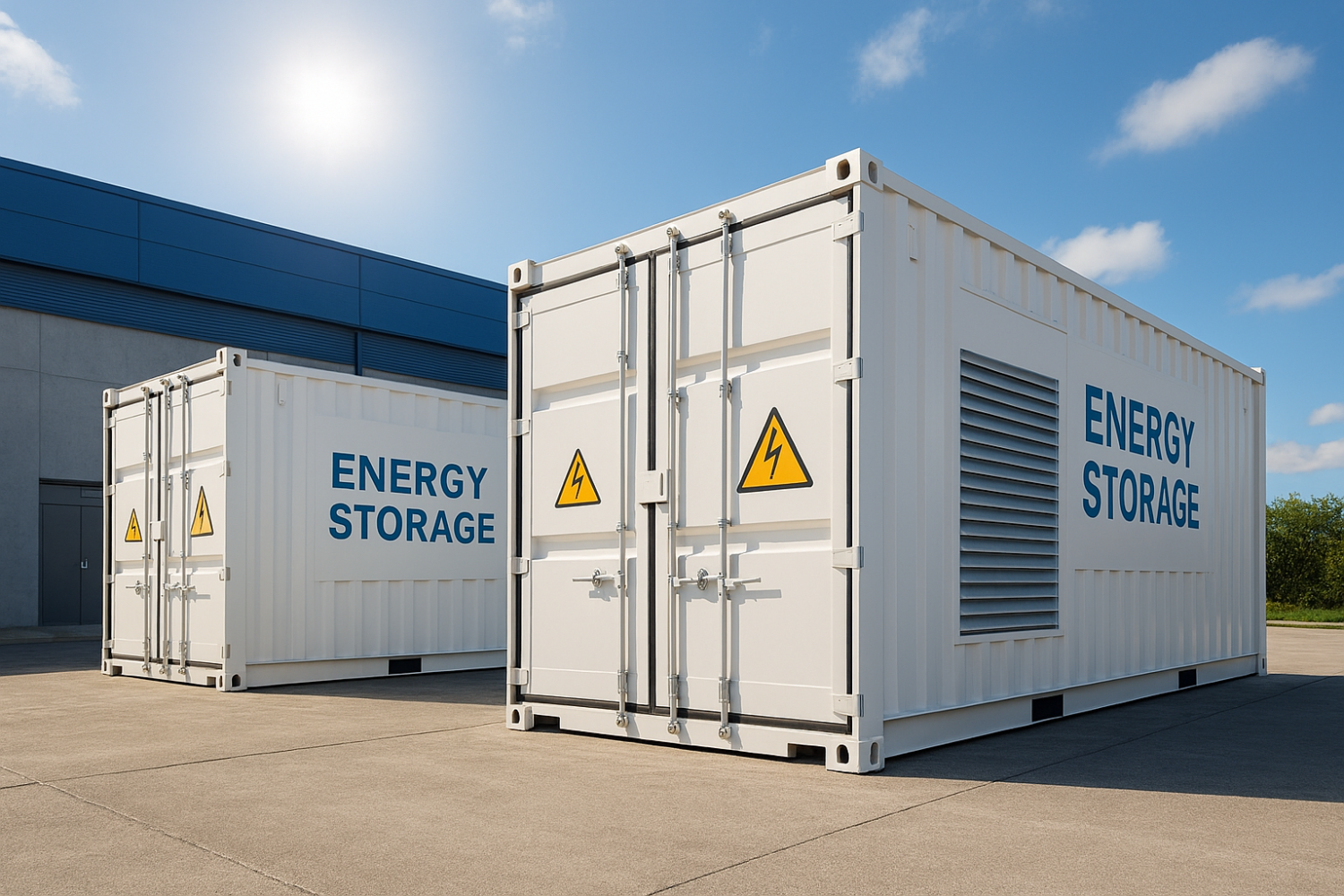
Batteries & Microgrids Are Now Affordable Enough to Protect Yourself from the Coming Data-Center Energy Crunch
Storing electric power on-site using batteries has finally become a reality. After years of advances in technology and manufacturing, batteries are better and more affordable than ever before, placing resilience and money savings from battery energy storage within reach of schools, hospitals, local governments.
Over the past 30 years, energy density of top-tier battery cells has risen fivefold while battery costs have fallen by 99%. The Federal Tax Credit for Battery Storage remains in place through 2033, cutting costs by 30%. Over the last ten years, the market for stationary energy storage has grown by an average of 40% per year. Meanwhile, new materials have made battery storage both safe and reliable.
Paired with on-site solar generation, battery storage can enable you to operate your own smart microgrid or virtual power plant to mitigate the risks of unprecedented utility bill increases and potential power outages as rapid growth in AI data centers outstrips the ability of utilities to meet spiking demand for electric power.
How Batteries Can Save You Money Now & Protect You in the Future
| Backup Power Uninterruptible Power Supply (UPS) that starts faster, runs cleaner & quieter, and lasts longer than fuel generators. | PV Self-Consumption Keep your solar running during a grid outage and save money over net metering compensation. | Power-Cost Optimization Shave peak demand and arbitrage power, charging when costs are low and discharging when high. | EV Charging Save power during the day to charge vehicles at lower cost at night when they’re parked. |
Protection from Demand Charges. As data centers continue to stress the power grid, utilities are increasing their assessment of demand charges on more classes of customers to control power usage at times of peak demand. Storing power in batteries when demand and costs are low can let you draw that power when demand and costs spike, cutting your peak demand levels and saving money on your whole electric bill.
Better than Diesel for Backup Power. Batteries have always been cleaner and quieter to operate than smelly, noisy diesel or gasoline generators. Now batteries have become safer and more reliable than traditional generators, and even faster to start up than generators using liquid fuels, enabling you to rely on batteries as the sole backup to keep the lights on and run mission-critical equipment for heating, cooling, and computing during a power outage. Federal and state funding for resilience centers can make projects with backup power even more affordable.
New Opportunities to Monetize Energy Storage. If your area allows Virtual Power Plants (VPPs), then you can sell power stored in batteries through a marketplace that extends beyond your local utility, allowing you to access accelerated rates of return available on the Mid-Atlantic (PJM) electrical grid. Your battery can charge itself using excess power from your own solar array, or from the grid itself when demand is low, then discharge to the grid when demand is high. This arbitrage can earn significant compensation by displacing much more expensive power from “peaker” plants.
Keep Your Solar Power Running During a Blackout. Normally, grid-tied solar power systems automatically shut down for safety reasons when your area experiences a power outage. But if you add battery storage, you can automatically create an on-site, stable microgrid when the power goes down, enabling you to continue to safely generate solar power during a blackout – just when you need it most. Then, when the grid becomes available, your battery will seamlessly transition back to normal interconnected operation, offering you energy resilience.
For Schools, Workforce Development Opportunities. With massive growth expected to continue for decades, on-site battery storage enabling a smart microgrid offers an unparalleled opportunity for schools and community colleges to offer hands-on job training in a technology with a bright future.
Don’t Wait for Utilities to Install Batteries — It Helps Everybody to Add Your Own Energy Storage Now
When schools, hospitals, and local governments install their own batteries on site, it adds more power to the grid for everybody, which is essential to meeting exploding demand for energy from AI data centers. Even better, local batteries that store power right where it’s used are also more efficient than batteries operated by utilities located out on the grid that have to transmit their power long distances, losing energy along the way. And local batteries can be installed at a comparable cost to utility batteries, making them an excellent value not only for the places that install them but for all ratepayers.

Why Work with Us
Secure Solar Futures is the industry leader in developing innovative solutions for customers to achieve affordability and resilience, ever since we first introduced the solar Power Purchase Agreement to Virginia in 2010. Learn more at SecureSolarFutures.com.