Apr 21, 2026
We Can’t Rely on Big Utility Solar Alone to Save the Grid
Wartime oil price spikes are the latest evidence that America is staring down the barrel of a new energy crisis.
High oil prices ripple through the economy, raising costs for transportation, food, housing, and consumer goods. Transitioning from liquid fuels to electricity would insulate the economy from oil price spikes in the future. But unfortunately, right now the United States is also facing a shortage of electric power, due to the rise of AI data centers and the failure of utilities to add more generating capacity to the grid fast enough to meet skyrocketing demand.
As the most affordable source of new power, solar must lead America’s energy transition. But so far, most of the discussion about solar has focused on size rather than quality, with the emphasis on building large utility solar projects, the bigger the better.
Big utility solar is absolutely necessary to provide scale. But it’s not the fastest way to put more electricity on the grid.
In a perfect situation, utility solar projects take at least 12-18 months to come online. In reality, long interconnection queues, slow local approvals and permits, and shortages of equipment and labor are delaying many large solar projects by months or years.
In the meantime, AI continues to advance and data centers continue to be built, demanding more and more power from the electrical grid every few months. This drives up costs for all ratepayers, homeowners and businesses alike, while putting reliable electrical service at risk. For example, after a rate increase last November, residential customers of Dominion in Virginia are now paying an average of $16 more per month. More increases are expected to follow as power supply fails to keep up with rising demand, especially in Virginia, which imports 40% of its power from out of state.
Small But Mighty Distributed Energy
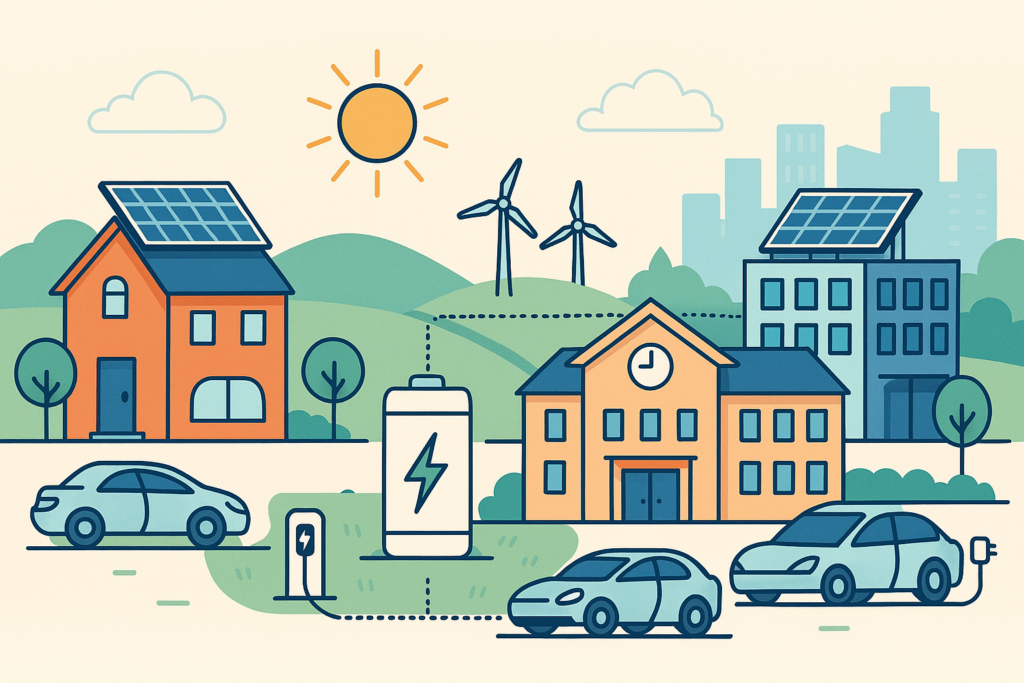
The fastest way to get new power on the grid is not to wait for new projects to come online but instead to tap into existing equipment already installed on homes, schools, hospitals, and businesses all over the place. Known as Distributed Energy Resources (DERs), these small and medium-scale energy technologies include solar panels, batteries, heat pumps, smart thermostats, and electric vehicles.
Connecting DERs to the grid properly can make the energy that they produce, store, and save available to other utility customers without having to build anything new. And best of all, getting more energy out of existing DERs can happen fast — in months not years — but only if technical and regulatory obstacles are removed.
Veteran energy writer Elizabeth McGowan argues that if Virginia, the state with the highest concentration of data centers on earth, can remove those barriers to DERs then the Old Dominion can serve as a model for the rest of the country to add energy to the grid quickly enough to avert an acute power shortage.
In “Yes, Virginia, There Is a Way to Get More DERs on the Grid,” McGowan asks, “Can the state that gave us Data Center Alley also be a clean tech accelerator?”
The answer, McGowan explains, may depend on the new Distributed Energy Resources Task Force just approved by the Virginia General Assembly and expected to be signed into law soon by Governor Abigail Spanberger.
The task force, with 15 members plus a chairperson, will bring together state officials, advocates for distributed energy, and energy businesses, likely including the state’s largest electric utility, Dominion. As McGowan writes,
Advocates for the task force maintain that Virginia utility customers deserve easier access to rooftop solar and other DERs, which Dominion has thus far successfully stifled by imposing strict and cost-prohibitive standards. With accessible and affordable DERs, Virginia could serve as a model for holding the line on rate increases while also meeting unprecedented demand for electricity with a grid free of fossil fuels, they argue.
When Regulators Fail to Regulate, Try Legislation
Recently, customers and providers of mid-size solar projects, including Secure Solar Futures, banded together through the Virginia Distributed Solar Alliance (VA-DSA) to ask state regulators to remove new requirements imposed by Dominion for mid-size solar projects to connect to the grid. Having to pay for and install equipment known as DTT and dark fiber as demanded by Dominion could raise costs by 40% or more, making solar projects affected too expensive to build.
After a protracted and costly judicial process spanning three years, in February the Virginia State Corporation Commission, the state’s utility regulator, disappointed solar advocates by declining to act. Since Dominion’s new requirements remained in place, schools, hospitals, and others were unable to proceed with solar buildouts that they’d planned for years. For example, high costs imposed by Dominion killed an ambitious buildout of solar power that would have saved Fairfax County Schools $60 million, money they could have invested in teacher salaries.
In response, VA-DSA members led by Secure Solar Futures CEO Tony Smith decided to pursue a legislative remedy to remove this and other barriers to getting more rooftop solar on the grid. While developing the concept of the DER Task Force and advocating for its passage, Tony hoped that bringing Dominion to the table with distributed energy customers and developers along with energy-savvy state officials would reset the relationship of utilities from adversarial to collaborative.
And while Dominion will be part of the group, the task force format was designed to prevent any one member from dominating discussions or determining outcomes as in some previous efforts. “The process is designed to move beyond positions to outcomes,” he told McGowan. “If it stays outcome-focused, no single stakeholder should define the result.”
“Distributed generation has always been a stepchild of utility-scale solar,” Tony added. “But that’s changing. Producing energy where you use it has tremendous leverage.”
After all, both utilities and their customers can benefit if DERs are added to the grid. Utilities are on the hook to keep rates down and make more power available fast. And DER customers welcome more ways to earn revenue from the solar panels and batteries they’ve already paid to install.
Read McGowan’s full article at E/lectrify News.
Written by: Erik Curren
Categorized:
Tagged:

About The Author
Erik is the Director of Marketing and Education at Secure Solar Futures and the author of three books on solar power and advocacy for clean energy.