Jun 11, 2026
Secure Solar Futures CEO Urges Caution in Media Story about NextEra-Dominion Merger
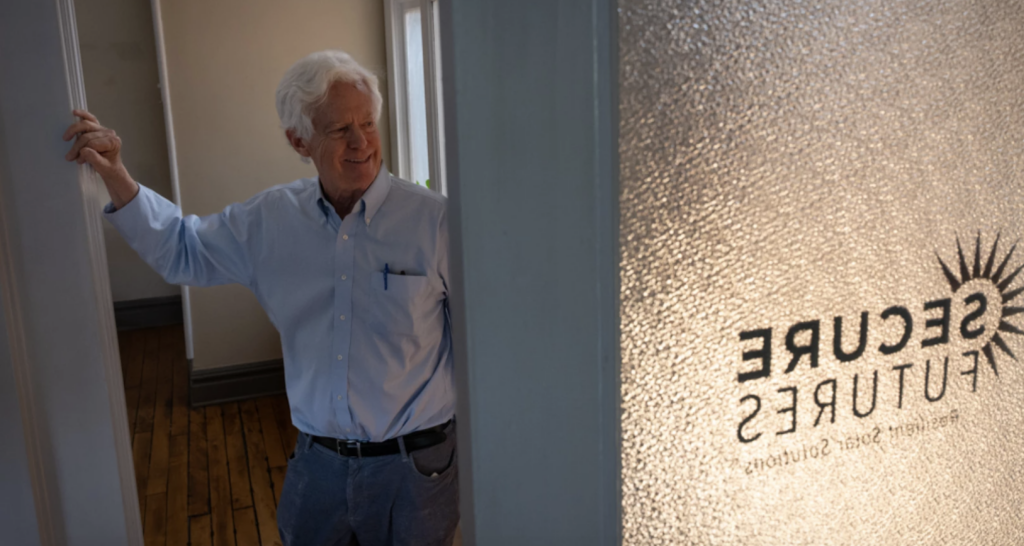
“Virginia’s leadership is right to ask hard questions now, before irreversible decisions are made,” Secure Solar Futures’s CEO Tony Smith told reporter Elizabeth McGowan in a story published this week by the Virginia Center for Investigative Journalism at WHRO, a public media group based in Norfolk, VA.
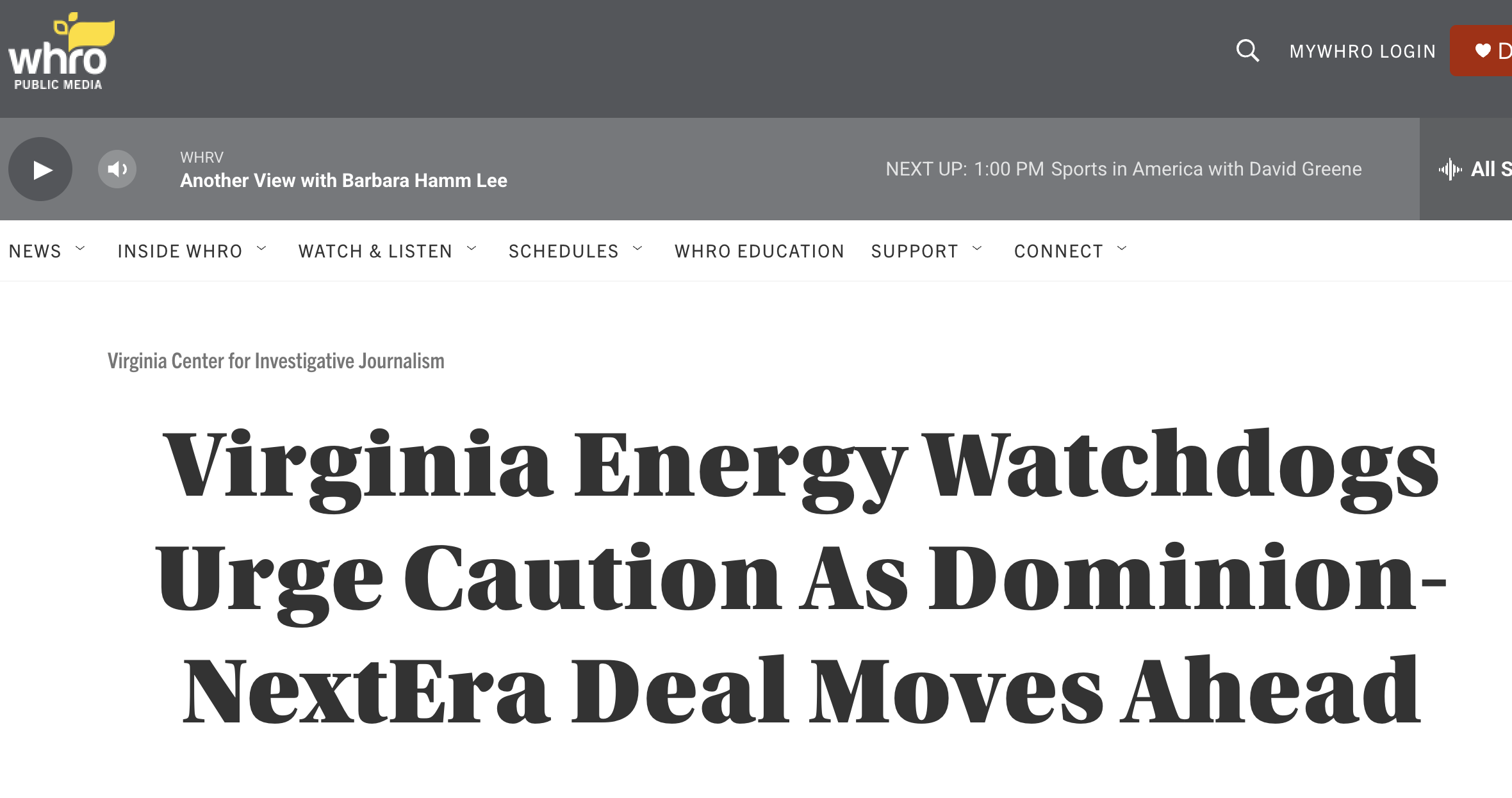
The story, “Virginia energy watchdogs urge caution as Dominion-NextEra deal moves ahead,” shares concerns from consumer advocates and clean energy leaders about the proposed merger between Florida-based utility company NextEra and Dominion, the largest electric utility in Virginia.
Tony, who is also Chair and Co-Founder of the Virginia Distributed Solar Alliance, expressed concerns that if state regulators allow Virginia’s already large utility company Dominion (worth $60 billion) to be absorbed by another utility based out of state that’s three times Dominion’s size (NextEra is valued at $180 billion), shareholders of both corporations might reap big profits at the expense of homes, schools, and businesses in Virginia.
Without reforms to the traditional utility business model, electric bills could spike with little recourse by Virginians to control runaway costs charged by the new mega-utility that will now be run from Florida.
As part of the review and approval process, Tony urges state regulators to demand improvements from both companies that would put Virginia ratepayers before company shareholders and elevate the public interest over private profits.
“If structured thoughtfully, this merger debate could become more than a corporate transaction,” he said in an interview. “It could be a catalyst for a broader public conversation about how the state upgrades its grid, protects ratepayers and builds an energy system designed to evolve.”
In particular, Tony wants the utilities to stop blocking new energy from the grid, especially rooftop solar and batteries installed on homes, schools, and businesses all over Virginia.
Such distributed energy resources can provide new energy to the grid quickly and affordably if they are connected together through software into networks known as virtual power plants, which were enabled last year in Dominion’s service territory under a pilot program.
But Dominion has been hesitant to embrace these small-scale energy sources, instead setting up a variety of roadblocks to block solar and storage projects in order to preserve the company’s monopoly on power generation. One such roadblock by Dominion stopped Fairfax County Schools from putting up enough solar panels to slash $60 million from their electric bills.
If the NextEra-Dominion merger enables utility business as usual, Virginia, which already operates a power deficit with other states, could face an even worse energy deficit in the future. Over the last few years, Virginia has alternated with California for the unenviable designation as #1 importer of electric power from out of state to feed growing demand that can’t be met from in-state supply. A larger power deficit would bring not only higher costs but also an increased risk of blackouts.
But if the merger debate includes serious reforms to the traditional model of centralized control by utilities that would open up the grid to more distributed energy, then Virginia’s ratepayers will have a better chance to benefit.
“This moment presents an extraordinary opportunity for a transformed utility model,” Tony said.
Read the whole article here.
Written by: Erik Curren
Categorized:
Tagged:

About The Author
Erik is the Director of Marketing and Education at Secure Solar Futures and the author of three books on solar power and advocacy for clean energy.